Inflatable water hammocks today have become the most coveted choice for calm-water and relaxed pool experiences. Additionally, their semi-submerged design offers comfort without complete floatation, which can naturally raise a crucial question. Are they completely safe for people who can’t swim? In this article, we will present a safety-first approach that can help keep casual fun aside from any potential risks.
- Stability and buoyancy factors to look into
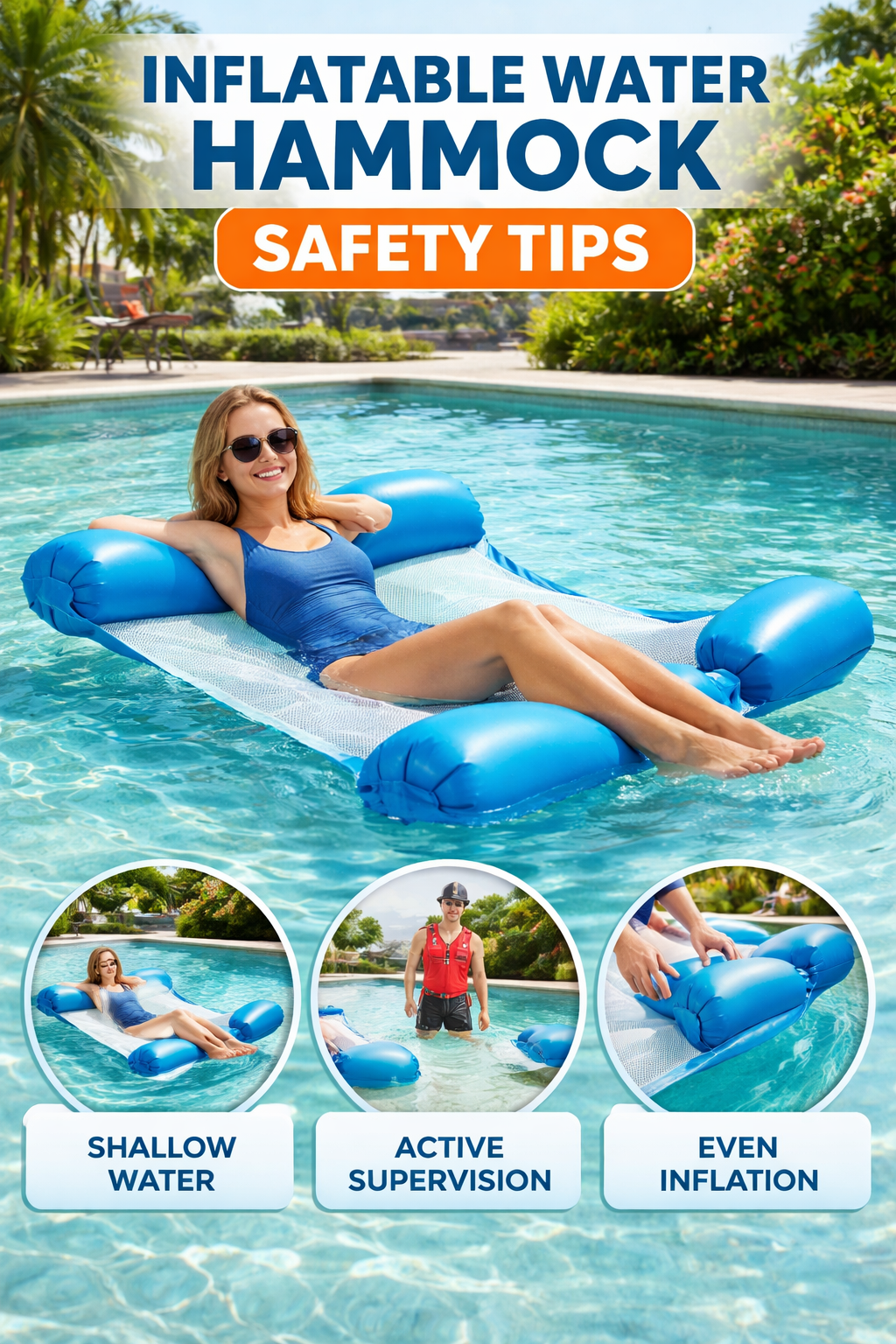
The inflatable water hammock relies on balanced weight distribution to maintain its stable position. It offers a secure and gentle experience when used in shallow pools according to its intended purpose. It becomes unstable when users perform sudden movements, the device experiences uneven inflation, or users exceed weight limits.
Non-swimmers need to focus on maintaining stability above all other concerns. The person who uses the float experience is at increased danger because their body already rests in a semi-submerged position. The design of these products does not create safety hazards, but their use requires caution, especially for those without swimming skills.
- A safe ambience for non-swimmers
The environment has an essential role to play in creating a safe space when using an inflatable water hammock. This device is best if you use it in a managed setting, such as a shallow swimming pool, where your feet can touch the floor as and when needed. The calm water conditions can enable the users to relax without fretting about currents and waves.
The open water spaces, which comprise the ocean and lakes, can introduce variables such as water movement and wind drift. If you are a non-swimmer, all these conditions can maximize risk, and it’s suggested that you opt for low-profile floating equipment.
- Physical and age considerations
People who have limited mobility, elderly users, and kids need to implement extra caution. Even though the inflatable water hammocks can feel safe, ideally, they aren’t built as a security device. Hence, if there is any non-swimmer in this age group, they should resort to strict supervision, especially in extremely shallow waters. Otherwise, they might encounter issues that can disrupt the overall experience.
- Correct usage and supervision perspective
The presence of active supervision needs to exist at all times. Non-swimmers should only use inflatable water hammocks when lifeguards or experienced swimmers are present. Proper inflation, according to manufacturer guidelines, also improves stability and reduces unexpected sinking. The process of mounting and dismounting the hammock requires people to perform it at a slow pace while their hands remain close to the pool edge or any stable surface. The practice of these minor behaviors will lead to a significant decrease in both panic attacks and slips and falls.
- A security perspective
When used responsibly, inflatable water hammocks can be enjoyed by non-swimmers in controlled environments with supervision. The informational resources together with the usage guidance on furthercustoms.com show that people need to understand float design and water conditions and their own comfort levels before they can use flotation devices.
Summing it up
Therefore, it is necessary to understand that if you aren’t able to swim, then this hammock is safe for you. However, they come with a set of risks that you need to address and manage. Typically, they come with a semi-submerged design that needs correct supervision, calm water, and smart use. That means, if you happen to be a non-swimmer, you should give importance to shallow pools, controlled conditions, and safety to make sure that you have a safe and relaxed floating experience.