Pedometers substantially affect how people reach their fitness goals by providing measurable data that motivates action. Research published in the Journal of the American Medical Association shows that if you use pedometers, you walk nearly 2,500 more steps daily compared to those without one. This increase proves that tracking technology creates accountability and transforms movement habits.
The popular goal of 10,000 steps per day—approximately 5 miles—works as a target for many fitness enthusiasts. But research suggests that you can experience health benefits with as few as 4,000 steps daily. A pedometer helps promote an active lifestyle by tracking your steps, which results in lower blood pressure, reduced cholesterol levels, and less total body fat.
On top of that, pedometers work well for long-term behavioral change. A study of people over age 45 revealed that regular pedometer users built healthier habits and stayed more active than non-users. These lasting results make pedometers valuable tools when you want real fitness improvements rather than quick fixes.
Table of Contents
- 1
- 2 What is a pedometer and how does it work?
- 3 Why tracking steps helps you stay motivated
- 4
- 5 Setting and adjusting your step goals
- 6 Using a pedometer to build healthy habits
- 7 Beyond steps: extra features that support your goals
- 8 Here are some FAQs about how does a pedometer help people reach their fitness goals:
- 8.1 How does a pedometer help people reach their fitness goals in Edgenuity?
- 8.2 How does a pedometer help people reach their fitness goals brainly?
- 8.3 What are the benefits of using a pedometer?
- 8.4 How does a pedometer track your steps?
- 8.5 How does a pedometer help people reach fitness goals?
- 8.6 What are the 5 levels of the physical activity pyramid?
- 8.7 How to reach your fitness goal?
- 8.8 What are the benefits of steps?
- 8.9 How can you use a pedometer to increase your daily steps?
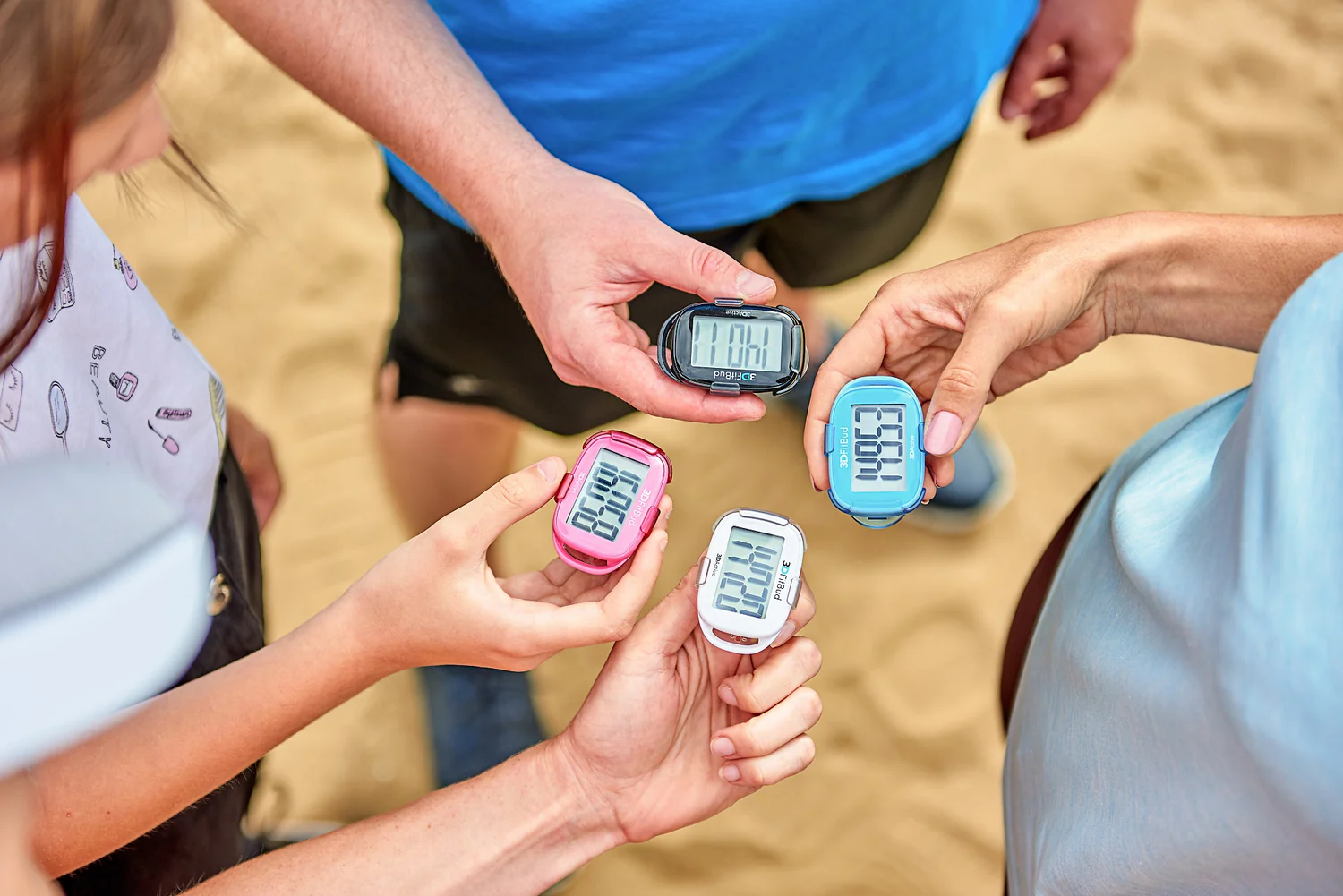
What is a pedometer and how does it work?
A pedometer acts as a reliable step-tracking companion throughout your fitness experience. This small device counts each step during daily activities by detecting body movement when worn on the waist. Step counters are different from general fitness trackers. They focus on measuring walking and running movements, which makes them great tools for people starting their fitness experience.
Basic definition and purpose
A pedometer detects vertical movement at the hip. It measures steps taken and estimates the walking distance. These devices started as tools for sports enthusiasts but evolved into everyday exercise counters that motivate users. The concrete data about daily physical activity helps users set measurable goals and track their progress.
Step counters show step counts on a digital display. They convert these numbers into distance measurements after fine-tuning to match a person’s stride length. Advanced models can calculate burned calories based on step count. This gives users a detailed view of their daily activity.
Types of pedometers: analog vs digital
Step counters have changed a lot since their early days. The market has two main types:
- Analog/Mechanical Pedometers: These traditional devices have a spring-suspended horizontal lever arm. It moves as the hip moves during walking. The movement creates an electrical circuit that registers a step. These early models need perfect vertical positioning. They show lower accuracy rates, especially during slow walks.
- Digital/Electronic Pedometers: Modern digital step counters are more accurate than older models. They employ microelectromechanical systems (MEMS) inertial sensors for precise step detection with fewer errors. Many digital models include features like calorie tracking, heart rate monitoring, and activity reminders.
How step counting technology works
Different pedometers use various technologies. They all detect rhythmic motion patterns from walking or running. Modern step counters use advanced sensors and algorithms instead of simple counting mechanisms.
Early mechanical models worked like pendulum clocks with a swinging mechanism. The body’s natural side-to-side tilt during walking triggers the pendulum. Each swing moves a gear that shows one step on the counter.
Modern electronic pedometers use accelerometers to detect changes in acceleration forces. These three-axis sensors measure movement in horizontal, vertical, and lateral planes. This creates distinct wave patterns matching walking motions. The device identifies specific peak-and-valley patterns that show steps.
The latest pedometers combine multiple sensor types. Many use gyroscopes with accelerometers to tell the difference between real steps and random movement. This integrated approach with smart algorithms helps step counters reach 95% accuracy in normal walking conditions.
These devices work best at speeds above 3 miles per hour, with accuracy reaching 96%. Accuracy drops to 60-71% at slower speeds below 2 mph. The sensors struggle to detect subtle hip movements from shuffling or dragging feet.
Why tracking steps helps you stay motivated
Step tracking devices do more than just count—they reshape how people move throughout their day. A pedometer helps bridge the gap between intention and action, which helps users reach their fitness goals.
Visual progress boosts commitment
Step counts climbing throughout the day create a powerful mental effect. The instant feedback from pedometers works as a reality check—when someone sees just 4,000 steps at 3 p.m. with a goal of 10,000, they’ll get moving before the day ends. Numbers make exercise real rather than theoretical.
Users often say pedometers are “like little personal trainers” because they show real numbers that help make quick decisions about activity levels. A recent University of Bath study found that people who tracked their steps added about 297 minutes of physical activity each week. Seeing progress creates accountability that leads to consistent action.
This visual feedback gets people thinking about their walking habits. One patient put it simply: “It’s nice to see that I did actually walk many steps today”. Users stay motivated as they better understand the difference between what they think they do and what they actually do.
Gamifying your daily movement
Adding game elements to step tracking proves to be a powerful way to motivate people. Research shows that “gamified” step-tracking programs got people moving 27% more than regular tracking. This big jump shows how turning exercise into a game changes how people stick with it.
Game elements that work well include:
- Points and rewards that show progress
- Levels and badges that celebrate wins
- Team structures that build connections
- Challenges that keep things fresh
- Leaderboards that spark friendly competition
These game techniques work because they tap into simple human needs—feeling capable through feedback, making choices freely, and connecting with others. By meeting these needs, game-like pedometer apps help people choose to exercise rather than feel forced.
A recent study showed how powerful this can be—people using both game features and money rewards kept up about 10% more daily steps than others for a full year. This kind of lasting change is what every fitness program wants.
How pedometers encourage small wins
Small victories tracked by pedometers help build lasting motivation. These little achievements stack up to create bigger fitness changes. Fitness expert Chris Mohr notes, “Starting with smaller goals and gradually increasing activity levels can make a big difference, keeping you motivated to maintain an active lifestyle”.
Studies back this up, showing health benefits with just 2,600-2,800 steps daily. These easy-to-reach goals let users win quickly, releasing dopamine that reinforces the habit. This success makes people more likely to keep moving.
Many pedometer users naturally progress from basic step counting to smarter walking strategies. They find activities that fit their life and develop their own ways to hit step goals. This shift from counting steps to making walking part of daily life shows how well pedometers work.
Step tracking works because it turns abstract health goals into real daily wins. Each step shows progress, each day brings a chance to improve, and each week builds on past successes. This constant feedback creates the kind of motivation that lasts.

Setting and adjusting your step goals
Setting real targets creates the foundation of successful pedometer-based fitness programs. Pedometers track each footfall and give you practical data that changes vague intentions into real achievements.
Start with a baseline step count
You need to know your current activity level before setting any goals. Wear your pedometer all day for about one week and stick to your normal routine. This shows your real starting point. Add your daily totals at the end of the week and divide by the number of days tracked to find your average.
Your baseline needs to be accurate, so:
- Track both weekdays and weekends
- Reset your pedometer each morning
- Write down your total steps at night
- Keep your normal activity patterns
This baseline becomes your starting point to track all future progress. Yes, it is true as one expert says, “You have to know where you’re at right now in order to determine how to move forward”.
Gradually increase your daily target
After finding your baseline, add steps bit by bit. Start by adding just 300-500 steps daily for two weeks. Then you can increase by about 10-20% each week.
This slow approach keeps you safe from injury and helps you stay motivated. Research shows that jumping too fast to higher step counts puts too much stress on your body. Most people find that adding about 2,000 steps (about one mile or 20 minutes of walking) makes real progress without being too hard.
Here’s a simple way to progress:
- Find your baseline over 3-4 days
- Add 2,000 steps over the next two weeks
- Keep adding 2,000 steps every two weeks until you hit your target
Is 10,000 steps right for everyone?
The prominent 10,000 steps measure came from a 1960s Japanese marketing campaign for pedometers. This number gets mentioned often but it’s not right for everyone.
Research points to different ideal step counts based on age and health:
- 7,000-8,000 steps: Gives most important health benefits for most adults
- 4,000-5,000 steps: Works best as a starting point for older adults
- 7,500 steps: Where health benefits leveled off in older women
Your personal improvement matters more than hitting some random number. Even small increases from your starting point bring big health benefits. The core idea is to move more than you do now, whatever that magic 10,000 number says.
Using a pedometer to build healthy habits
Building lasting habits from step tracking needs smart planning. People who succeed with pedometers build systems that blend walking into their daily lives. This makes fitness feel natural and fun instead of a chore.
Creating a consistent walking routine
Consistency plays the biggest role in getting the most from your pedometer. Your step counter should become part of your morning ritual. Put it on when you get dressed and wear it until bedtime. This simple habit will give a complete picture of how much you move each day.
Start by checking your baseline steps and look for chances to move more throughout your day. Many people find they can add more activity by spotting inactive periods in their schedules. Adding just 300-500 more steps each day builds real progress toward bigger fitness goals.
Writing your steps in a diary or digital log builds commitment because you can see your progress. Research shows that people who kept activity logs boosted their physical activity by 26.9% above their starting point.
Getting family or friends on board for accountability
Walking works better when you share it with others. Studies prove that walking programs with friends, family members, or coworkers lead to better stick-to-it rates and more fun. These social bonds turn exercise from a solo task into a time to connect.
Group challenges really fire up motivation:
- Set up step competitions at work, school, or among family members
- Create leaderboards that show daily, weekly, or monthly progress
- Use random rewards for people who hit their targets
- Let participants cheer each other on virtually
These social support systems make walking programs 20-30% more effective than going solo. The social aspect also fills our need for connection that we can’t get from exercising alone.
Making walking fun
Plain step counting can get boring after a while. Adding game elements turns regular walking into something exciting. People using gamified step-tracking apps walked 27% more than those with basic pedometers.
Mix up your routes daily to keep things fresh. Take walks at different times to see new environments and lighting. Families can make walks educational by showing kids interesting landmarks, vehicles, or nature.
Some creative people even make up pedometer games like “step bingo” or seasonal quests where you unlock rewards by hitting step goals. These fun approaches tap into your brain’s reward system and help you stay active.
Beyond steps: extra features that support your goals
Modern pedometers do much more than count steps – they are complete health monitoring systems. Step tracking works with additional features to create an integrated approach to fitness.
Calorie tracking and heart rate monitoring
Advanced pedometers use proprietary algorithms to calculate calories burned. These calculations combine body measurements with exercise data from GPS and accelerometry. The devices use photoplethysmography (PPG) technology with light sensors that detect heart rate by measuring blood volume changes. Wrist-based heart rate monitoring gives good enough accuracy for most casual users. Chest straps still provide better precision for serious athletes.
Sleep tracking and recovery insights
Sleep quality plays a crucial role in exercise recovery and overall wellness. Modern pedometers track sleep by monitoring heart rate variability, breathing rate, and movement patterns. The devices can identify different sleep stages (light, deep, and REM) and generate sleep scores (0-100) based on how long and well you sleep. This complete analysis helps users learn how their daily activities affect sleep patterns. Users can see the connection between their activity levels and recovery.
Reminders and inactivity alerts
Older adults spend almost 80% of their waking hours sitting, which creates serious health risks. Smart alerts remind users to move regularly. Users can customize these notifications for specific times. Most systems can detect extended periods of inactivity rather than just working on fixed timers. Advanced models track hourly steps and encourage steady movement throughout the day.
Pedometers are powerful tools that turn fitness goals from abstract ideas into measurable wins. These simple devices optimize behavior changes by giving immediate feedback that pushes people to act. The daily step count creates a sense of responsibility that users find more compelling than regular exercise programs.
Studies show that pedometer users take more steps than non-users, whatever their target might be. The most important thing is to improve your own baseline instead of chasing a random number like 10,000 steps. Small improvements bring big health benefits. This makes pedometers available tools for everyone, no matter their fitness level.
Pedometers do much more than count steps. They help people build regular routines, especially when paired with social support systems and game-like elements. People who track steps with friends and family stick to their programs longer. They also feel better about their fitness trips.
Today’s pedometers have grown into detailed health monitoring systems. They track calories, heart rate, sleep patterns, and more. These extra features create a comprehensive way to look after multiple parts of health at once.
People who succeed with pedometers follow a common pattern. They check their starting point, set realistic goals, slowly raise their targets, and make walking a natural part of their day. This method turns temporary changes into lasting habits. Pedometers work because they make fitness concrete and achievable through small daily actions rather than big lifestyle changes.
Science backs up what many users have found through experience – tracking steps makes you take more steps. This simple fact makes pedometers worth buying for anyone who wants lasting fitness improvements. Even with all the new fitness tracking technology, one basic rule stays true: measuring progress brings improvement.
Here are some FAQs about how does a pedometer help people reach their fitness goals:
How does a pedometer help people reach their fitness goals in Edgenuity?
In an Edgenuity health or physical education course, the lesson would explain that a pedometer helps people reach their fitness goals by providing concrete, measurable data on daily activity. It serves as a tool for self-monitoring and motivation, turning an abstract goal like “be more active” into a specific, trackable objective. This directly addresses the core question of how does a pedometer help people reach their fitness goals.
How does a pedometer help people reach their fitness goals brainly?
On a platform like Brainly, the answer to how a pedometer helps would focus on its role in providing immediate feedback and accountability. By tracking steps, it makes people aware of their activity levels and encourages them to meet daily targets, which is a foundational step in behavior change. This answers the query of how does a pedometer help people reach their fitness goals? with a practical, student-focused explanation.
What are the benefits of using a pedometer?
The benefits of using a pedometer include increased awareness of daily movement, motivation to be more active through goal setting, and the ability to track progress over time. It can help break up sedentary behavior and provide a simple, low-cost way to quantify physical activity. This tool is a clear answer to how does a pedometer help people reach their fitness goals by making activity tangible.
How does a pedometer track your steps?
A pedometer tracks steps by using a mechanical sensor or an accelerometer to detect the hip’s up-and-down motion or the swing of the leg that occurs with each step. Digital pedometers and smartphones convert this motion into an electronic count, which is then displayed as the number of steps taken. This tracking function is the technical basis for how does a pedometer help people reach their fitness goals.
How does a pedometer help people reach fitness goals?
A pedometer helps people reach fitness goals by providing objective feedback, turning a general aim into a specific, numeric target like taking 10,000 steps a day. This data allows for self-monitoring, which increases motivation and accountability, key factors in forming a lasting habit. Therefore, understanding how does a pedometer help people reach their fitness goals is central to using one effectively for behavior change.
What are the 5 levels of the physical activity pyramid?
The five levels of the physical activity pyramid, from bottom to top, are: Level 1 – Lifestyle/Everyday Activities, Level 2 – Active Aerobic and Recreational Activities, Level 3 – Flexibility and Strength Exercises, Level 4 – Rest and Inactivity, and the apex representing balancing energy intake and output. A pedometer primarily helps track activities at the foundational Level 1, directly supporting how does a pedometer help people reach their fitness goals? by monitoring daily movement.
How to reach your fitness goal?
To reach your fitness goal, you should set a specific, measurable, achievable, relevant, and time-bound (SMART) target and create a consistent plan to work toward it. Using tools like a pedometer for tracking and celebrating small milestones are effective strategies for maintaining motivation. This process exemplifies how does a pedometer help people reach their fitness goals by providing the measurable data needed for such a plan.
What are the benefits of steps?
The benefits of accumulating steps include improved cardiovascular health, better weight management, enhanced mood, and a reduced risk of chronic diseases like type 2 diabetes. Regularly meeting a step goal contributes to overall physical activity levels, which is crucial for long-term well-being. A pedometer operationalizes this by quantifying steps, which is how does a pedometer help people reach their fitness goals.
How can you use a pedometer to increase your daily steps?
You can use a pedometer to increase your daily steps by first establishing a baseline average and then setting a gradual, incremental goal, such as adding 500 steps each week. It encourages you to find small opportunities for more movement, like taking the stairs or a short walk break. This practical application is the essence of how does a pedometer help people reach their fitness goals.