Tattoos have long been a form of self-expression, with many UK adults sporting at least one design. Yet as life circumstances change, many Londoners find themselves reconsidering these permanent marks. The once-meaningful symbol might no longer align with their current identity, career aspirations, or personal aesthetic.
There has been growing interest in tattoo removal across London in recent years. This trend appears to reflect changing attitudes toward body art and increased awareness of advanced removal techniques. As technology improves, more people are discovering that unwanted tattoos need not be lifelong commitments.
The reasons behind seeking tattoo removal vary widely among London adults. Some wish to erase reminders of past relationships or life phases, while others face workplace restrictions on visible body art. Whatever the motivation, the growing availability of effective laser treatments has transformed what was once considered permanent into something increasingly optional.
Table of Contents
The Rising Trend of Tattoo Reconsideration in London
More UK adults are choosing to get tattoos than in previous years, and this wider embrace of body art coincides with rising demand for removal or modification services.
For many Londoners, tattoo removal offers a solution when tattoos no longer fit their current life situation. The tattoo removal market in London is expanding quickly.
The tattoo removal market in the UK is expected to see continued growth in the coming years. This trend is influenced by both technological improvements and evolving attitudes towards permanent body art.
Londoners cite various reasons for rethinking their tattoos. Career advancement often tops the list, particularly in industries with conservative dress codes. Relationship changes prompt many to remove names or symbols of former partners.
This trend follows a broader pattern of re-examining previous decisions, which is common in urban centres like London. As people progress through different life stages, they often reconsider past choices that once seemed permanent.
Why Londoners Are Changing Their Minds About Tattoos
The competitive London job market plays a major role in tattoo reconsideration. Many professionals find that visible tattoos can affect career prospects in certain industries. Banking, law, and corporate environments often maintain conservative appearance standards.
Aesthetic preferences naturally shift as people age. A design chosen at 18 might not appeal to the same person at 35. This shift in taste leads many Londoners to rethink tattoos that no longer match their personal style.
Technical problems also drive removal decisions. Poorly executed tattoos, those that have faded unevenly, or designs that have blurred over time often prompt removal. The high concentration of tattoo studios in London means quality varies widely.
Cultural attitudes toward tattoos continue to change across different London demographics. While younger generations generally view tattoos as mainstream, older generations may hold more traditional views.
Professional and Social Factors
Industry expectations vary widely across London’s diverse employment sectors. Corporate environments typically maintain stricter appearance policies than creative industries. Healthcare, hospitality, and customer-facing roles often have specific guidelines about visible tattoos.
Relationship changes represent another common reason for tattoo removal. Names, initials, or symbols associated with former partners can become unwanted reminders of the past. As relationships end, many Londoners seek to remove these permanent markers.
Social media has significantly influenced both tattoo trends and removal decisions. The constant visibility of personal images online makes some more aware of their appearance. This increased attention often leads to rethinking visible tattoos.
Modern Tattoo Removal Technologies Available in London
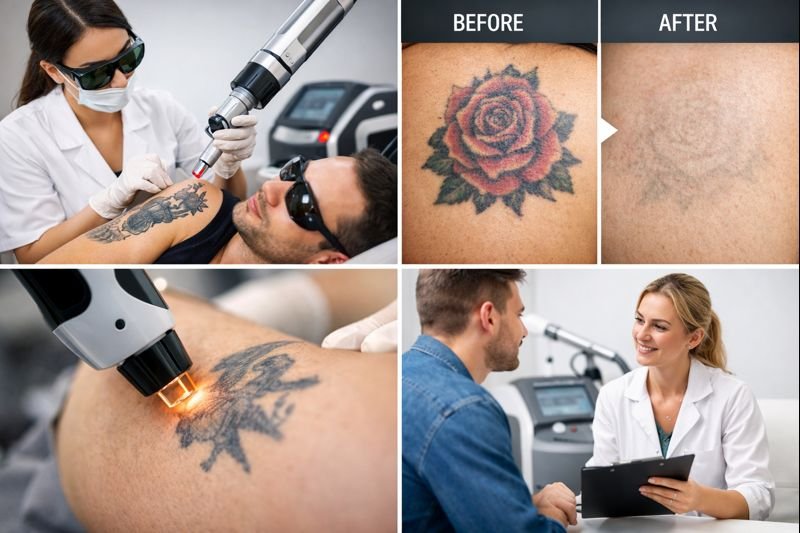
Technological advances have changed tattoo removal in recent years. London clinics now offer both Q-switched and picosecond lasers, with the latter representing the newer technology. Picosecond lasers deliver energy in much shorter pulses, often resulting in faster clearance.
Laser tattoo removal works through breaking down ink particles into tiny fragments. The body’s immune system then naturally eliminates these fragments over time. This process explains why multiple treatments are needed.
Several factors influence how effectively tattoos respond to laser tattoo removal services. Older tattoos tend to fade more easily as the ink has already begun to disperse within the skin over time, making it easier for lasers to break down remaining pigment.
The colour of the ink also plays a major role. Black pigment absorbs laser energy efficiently and breaks apart with fewer treatments, while blues and greens reflect more wavelengths and resist fragmentation. An experienced practitioner tailors the approach based on the tattoo’s age and colours present.
London offers numerous clinics specialising in tattoo removal. These services operate under regulatory oversight to ensure safety standards are maintained for patients seeking treatment.
What to Expect During the Process
Complete tattoo removal typically requires multiple sessions spaced several weeks apart. This spacing allows the body time to clear away ink particles between treatments. Many tattoos require several sessions for optimal results.
Many describe the sensation during treatment as similar to being snapped with a rubber band. Most London clinics offer numbing creams or cooling systems to manage discomfort during the procedure.
Aftercare is important for proper healing and best results. London’s urban environment makes proper wound care especially important. Patients typically need to keep the area clean and avoid sun exposure.
Setting realistic expectations is necessary. Complete removal is not always possible for every tattoo. However, noticeable fading can be achieved in most cases.
Making Informed Decisions About Tattoo Removal
When considering tattoo removal in London, asking the right questions helps ensure quality care. Potential clients should enquire about practitioner qualifications, the specific laser technology used, and expected outcomes for their particular tattoo.
Being aware of the full commitment involved is necessary. Beyond the multiple sessions required, patients must follow strict aftercare protocols between treatments. The entire process typically spans several months.
Typical costs for laser tattoo removal services in London reflect several key factors. Clinics in central London may charge more than those in outer areas, with prices for standard business card size tattoos often varying depending on the clinic and location.
To avoid surprise expenses, always request a clear price breakdown during a consultation and check if package rates are available. Get a written plan that accounts for tattoo details, expected session count, and any additional fees.
For those hesitant about full removal, alternatives exist. Partial removal can lighten a tattoo enough for an effective cover-up with new artwork. Modification of existing tattoos offers another option.
Consultation appointments and patch tests are essential first steps. These allow practitioners to assess how the skin and ink will respond to treatment. Most reputable London clinics include these preliminary steps as standard practice.
Beyond Removal: How Londoners Are Reimagining Their Body Art
Partial tattoo removal has become increasingly popular among Londoners looking to refresh their body art. Fading an existing tattoo gives artists a cleaner canvas for creating new designs. This approach allows for creative change rather than complete erasure.
Instead of opting for full removal, many Londoners visit tattoo studios that specialise in modification work. A common approach involves using laser sessions to lighten a tattoo, making it easier for an artist to overlay a new design.
Some people report feeling more confident after removing unwanted tattoos. While individual experiences vary, the process can represent a way to regain control over personal presentation.
Tattoo removal often forms part of broader personal change stories common in London. As people change careers, relationships, or lifestyle directions, modifying body art becomes one aspect of updating their presentation.
Innovation continues to shape the future of tattoo removal in the UK. Ongoing progress in laser technology remains important for precise and effective removal. These improvements allow for reduced discomfort, faster sessions, and safer outcomes across a variety of skin types.